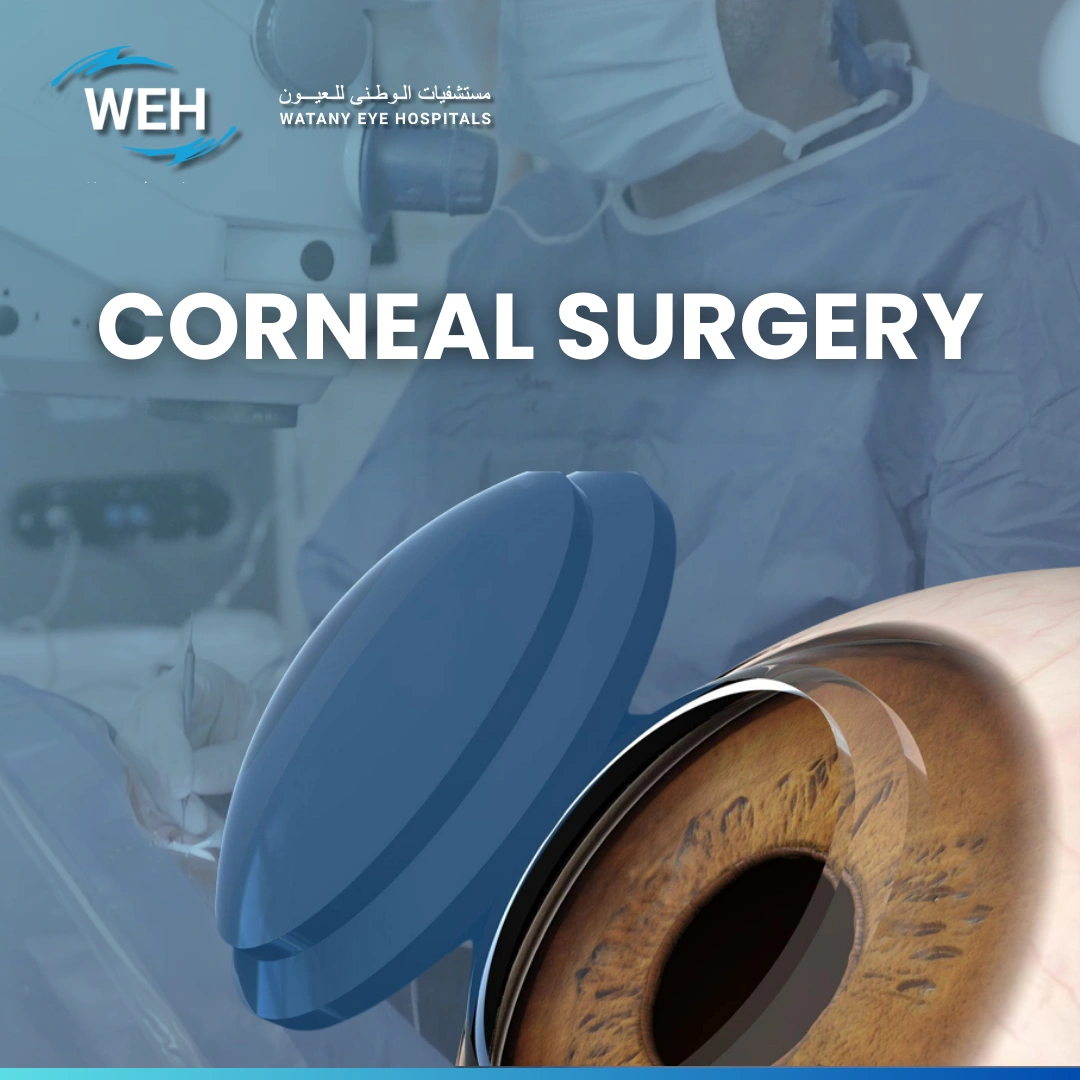
The Full Guide to Corneal Surgeries
Corneal surgeries are among the most delicate and impactful surgeries in ophthalmology, as the cornea plays a central role in focusing light and ensuring clear vision. Any disturbance in corneal transparency or shape can significantly affect visual quality, making surgical intervention necessary in certain cases.
With major advances in medical technology, modern corneal surgery has become safer, more precise, and associated with higher success rates and faster recovery. The choice of surgery depends on the patient’s condition, the extent of corneal damage, and the response to non-surgical treatments.
This guide provides a clear and patient-friendly overview of corneal surgeries, helping patients understand their condition, explore available treatment options, and make informed decisions alongside their eye care specialist.
What Is The Cornea? Why Is Its Clarity Essential For Vision?
The cornea is the transparent front layer of the eye and the first surface that light passes through before reaching the lens and retina. It plays a crucial role in focusing light and is responsible for a large portion of the eye’s refractive power, making it essential for clear and sharp vision.
Any change in the shape or transparency of the cornea whether due to genetic conditions, infections, injuries, or degenerative disorders can lead to blurred or reduced vision. This is why maintaining corneal health is fundamental to overall eye function and visual quality.
Conditions That Require Corneal Surgeries
Corneal surgery is recommended when the clarity, shape, or function of the cornea is significantly affected and medical or non-surgical treatments are no longer effective.
Below are the main conditions that may require surgical intervention:
Keratoconus
Keratoconus is a condition in which the cornea gradually becomes thinner and bulges into a cone-like shape, leading to distorted and blurred vision. In advanced stages, when glasses or contact lenses fail to improve vision, corneal surgery may be necessary to stabilize the cornea and enhance visual quality.
Corneal Opacities
Corneal opacities result from previous infections, injuries, or inherited conditions, causing loss of corneal transparency. When these opacities interfere with the visual axis and significantly reduce vision, surgical treatment becomes the most effective option to restore clarity.
Advanced Corneal Infections
Some corneal infections can be severe or poorly responsive to medication, leading to deep tissue damage. When medical treatment fails and vision or eye integrity is at risk, corneal surgery becomes an essential treatment option.
Corneal Injuries
Corneal injuries include deep cuts or ruptures caused by trauma or sharp objects. Severe injuries may result in permanent corneal damage or scarring, making surgical repair crucial to restore structure and maintain vision as much as possible.
Symptoms Of Corneal Diseases
-
Visual impairment caused by corneal irregularities or distortion.
-
Loss of corneal clarity due to previous infections or trauma.
-
Inadequate response to medical treatment or contact lenses.
-
Persistent visual symptoms such as blurred vision or light sensitivity.
Main Goals of Corneal Surgeries
-
Restore clearer and more stable vision.
-
Reduce visual discomfort.
-
Prevent further progression of corneal disease.
-
Select the most appropriate surgery based on the patient’s condition.
Common Types Of Corneal Surgeries
There are different types of corneal surgery depending on the underlying condition and how severely vision is affected. The choice of surgery is based on a detailed eye examination, with the primary goal of improving vision and maintaining corneal health.
Comprehensive List of Corneal Surgeries & Procedures
1. Keratoplasty (Corneal Transplantation)
-
PKP – Penetrating Keratoplasty
-
DALK – Deep Anterior Lamellar Keratoplasty
-
SALK – Superficial Anterior Lamellar Keratoplasty
-
DMEK – Descemet Membrane Endothelial Keratoplasty
-
DSEK / DSAEK – Descemet Stripping (Automated) Endothelial Keratoplasty
-
Corneal Patch Grafting
2. Keratoconus & Corneal Ectasia Management
-
Corneal Collagen Cross-Linking (CXL)
-
Athens Protocol (Topography-guided PRK + CXL)
-
Intrastromal Corneal Ring Segments (ICRS)
-
RGP Fitting
-
Keratoplasty
3. Therapeutic & Laser-Based Corneal Procedures
-
PTK – Phototherapeutic Keratectomy
-
Laser Refractive Surgeries:
-
LASIK
-
Femto-LASIK
-
SMILE / Femto-SMILE
-
4. Ocular Surface & Corneal Reconstructive Procedures
-
Superficial Keratectomy
-
AMT – Amniotic Membrane Transplantation
-
Corneal Tissue Adhesives (Corneal Glue)
-
Conjunctivoplasty
5. Limbal Stem Cell Transplantation Procedures
(For chemical burns, limbal stem cell deficiency, and severe ocular surface disease)
-
SLET – Simple Limbal Epithelial Transplantation
-
Limbal Stem Cell Transplantation Techniques:
-
CLAU – Conjunctival Limbal Autograft
-
lr-CLAL – Living-Related Conjunctival Limbal Allograft
-
KLAL – Keratolimbal Allograft
-
6. Artificial Cornea (Keratoprosthesis)
-
Boston Keratoprosthesis (KPro)
(For end-stage corneal disease with total limbal stem cell deficiency or multiple failed grafts)
7. Corneal Injections
-
Intrastromal Antibiotics & Antifungals
(For resistant or deep microbial keratitis)
8. Management of Recurrent Corneal Erosions
-
Alcohol Delamination Epitheliectomy
-
Dry Amniotic Membrane Application
-
PTK – Phototherapeutic Keratectomy
Latest Advances In Corneal Surgeries
Corneal surgery has seen significant advancements in recent years, leading to higher success rates, fewer complications, and faster recovery. Modern techniques focus on precision and minimally invasive approaches to preserve healthy eye tissue.
Advanced Corneal Transplant
-
Only the damaged layer of the cornea is replaced.
-
Preserves healthy corneal tissue.
-
Reduces the risk of graft rejection.
Laser-Assisted Corneal Surgery
-
High-precision lasers are used for corneal shaping and incisions.
-
Offers more accurate and stable outcomes.
-
Less discomfort and quicker recovery.
Enhanced Corneal Cross-Linking Techniques
-
Uses optimized ultraviolet light protocols.
-
Strengthens the cornea and slows disease progression.
-
Considered safe and effective in early to moderate cases.
Advanced Corneal Imaging Technology
-
Provides detailed analysis of corneal structure.
-
Allows customized surgical planning.
-
Improves overall surgical outcomes and safety.
Check Your Vision Today
Get in touch with us through our hotline or WhatsApp
Hotline
16112Tips Before, During, and After Corneal Surgery
Before Corneal Surgery
-
Undergo a thorough eye exam, including corneal thickness measurement, corneal topography, and retinal and optic nerve evaluation when needed.
-
Inform your ophthalmologist about your full medical history, especially conditions such as diabetes, autoimmune diseases, or the use of medications that may affect wound healing.
-
Stop wearing contact lenses for the period recommended by your doctor, as lenses can temporarily alter the shape of the cornea.
-
Avoid using makeup, creams, or lotions around the eyes before the surgery .
-
Follow fasting instructions if the surgery will be performed under general or regional anesthesia.
Tips During Corneal Surgery
During the surgery , the medical team follows precise protocols to ensure corneal safety and patient comfort throughout the surgery.
-
Remain calm and avoid moving your head or eyes unless instructed by the surgeon.
-
Carefully follow the surgeon’s directions, such as focusing on a specific point when required.
-
Be reassured that most corneal surgeries are performed under local anesthesia and are not painful.
-
The surgery is usually completed in a relatively short time thanks to advanced surgical technologies.
After Corneal Surgery
Postoperative care is just as important as the surgery itself, as final visual outcomes depend heavily on proper recovery and follow-up.
-
Use prescribed eye drops exactly as directed to prevent infection and support corneal healing.
-
Avoid rubbing or applying pressure to the eye during the recovery period.
-
Stay away from dust, smoke, and contaminated water, and avoid swimming until your doctor allows it.
-
Attend all scheduled follow-up visits to monitor corneal stability and visual improvement.
-
Contact your doctor immediately if you experience severe pain, increasing redness, or a sudden decrease in vision.
Potential Risks & Complications Of Corneal Surgery
Although corneal surgeries are considered highly safe and effective surgeries especially with modern surgical techniques, it is normal for patients to ask about possible risks. The good news is that most complications are mild, temporary, and manageable with proper care.
Common and Temporary Effects
-
Mild discomfort or a burning sensation during the first few days after surgery.
-
Temporary eye redness or increased tearing.
-
Blurred vision during the healing phase, which gradually improves over time.
These effects are part of the normal recovery process and usually resolve with prescribed medications.
Less Common Complications
-
Delayed corneal healing, particularly in patients with diabetes or chronic conditions.
-
Temporary dry eye symptoms, easily controlled with lubricating eye drops.
-
Mild surface inflammation, which responds well to early treatment.
Rare Complications
-
Infection or graft rejection in corneal transplant cases, which is uncommon and often successfully treated when detected early.
-
Unexpected changes in visual clarity that may require additional follow-up or minor adjustments.
How Risks Are Minimized
-
Careful preoperative evaluation and proper surgical planning.
-
Use of advanced technology and precise surgical techniques.
-
Strict adherence to postoperative instructions and regular follow-up visits.
Success Stories & Patient Experiences
At Watany Eye Hospitals, real patient stories highlight the transformative impact of corneal surgeries . These journeys go beyond medical results, they reflect renewed confidence, comfort, and vision clarity.
check our youtube channel for Watany patient testimonials
Check Your Vision Today
Get in touch with us through our hotline or WhatsApp
Hotline
16112
WhatsApp
Chat on WhatsApp
Check Your Vision Today
Get in touch with us through our hotline or WhatsApp
Hotline
16112FAQS About Corneal Surgery
1) Is corneal surgery safe?
Yes, corneal surgery is generally safe and has a high success rate when properly planned and performed using modern techniques.
2) Is the surgery painful?
No, the surgery is done under local or general anesthesia, and patients do not feel pain during the surgery .
3) How long does corneal surgery take?
Usually between 30 and 90 minutes, depending on the type of surgery and the eye condition.
4) When does vision improve after surgery?
Vision may begin to improve within days, but full visual recovery can take weeks or months, depending on the surgery.
5) Do I need rest after surgery?
Yes, rest is recommended, especially during the first few days, while following all medical instructions.
6) Can the problem come back after surgery?
In most cases, no, but regular follow-up visits are important to maintain long-term results.
7) Can I use my phone or watch TV after surgery?
Yes, in moderation, especially at the beginning, while avoiding prolonged eye strain.
Watany Eye Hospitals Advice
Early detection and regular corneal check-ups play a key role in identifying problems at an early stage, increasing the chances of successful treatment and reducing the need for complex surgical procedures. Following your doctor’s instructions before and after corneal surgery is essential to achieve the best possible outcomes and maintain long-term visual quality.
Check Your Vision Today
Get in touch with us through our hotline or WhatsApp
Hotline
16112External Source:
To learn more, visit MayoClinic For Corneal surgeries